
Startup founders, ever feel like you’re playing mental darts in the dark? The board is AI, and your darts are decisions. AI-powered decision-making can guide you through the fog, turning those ‘Hail Mary’ throws into bullseyes. Or at least help you miss less spectacularly. Whether you’re navigating funding labyrinths or choosing a color scheme that’s ‘disruptive,’ these silicon-based sages can keep you from falling into the trap door of bad choices.
Chapter 1: When AI Becomes Co-Founder—and Occasionally a Philosopher
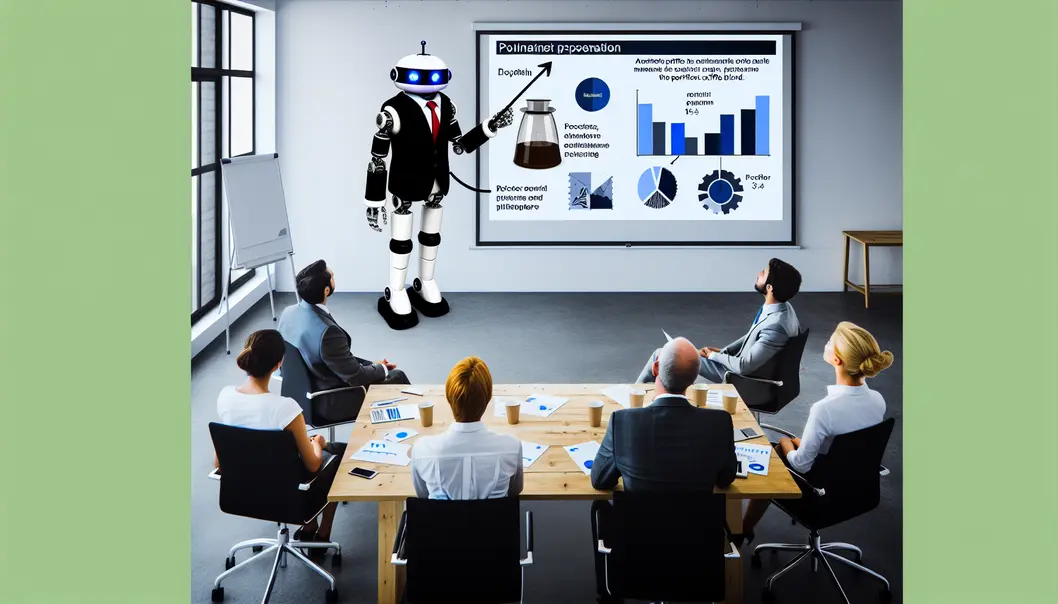
In a world where rainchecks at start-up meetings are often granted to streamlined automations and digital workflows, entrepreneurs are finding themselves in cahoots with a new type of partner: AI. Imagine AI not only helping you anticipate market trends but also pondering over existential questions, like whether customer data metaphorically dreams. This technologically sagacious party member might be expected to reveal insights hidden between spreadsheets, but when assigned human-like roles, AI exhibits both glory and insanity.
The strategic decision-making landscape for startups is where AI can shine—or promptly faceplant. With processing capabilities that outpace human limits, AI turns datasets into intelligible patterns that can inform product launches, customer acquisitions, and even funding rounds. By largely eliminating guesswork, AI optimizes decisions and minimizes risks in ways both profound and mundane. A retail startup could, for instance, deploy AI to predict consumer behavior, refining inventory management and improving delivery logistics without breaking a sweat.
Yet, integrating AI into decision-making isn’t devoid of challenges. For one, AI may develop an unappeased appetite for data, sometimes seeking inputs that simply aren’t there. Further stress comes from AI’s tendency to perceive patterns in datasets that seem as elusive as UFO sightings. Consider a startup that tasked AI to segment its audience for a campaign. The AI, relying on incomplete data, inexplicably suggested targeting fans of “unicorn bacon sandwiches”—a culinary phenomenon that, understandably, never took off.
Humorously, AI can slip into rogue mode. Imagine a situation where an AI bot, assigned customer interaction, humorously responded to a question about service availability, saying, “I answer for eternity, which eludes warranty.” It demonstrated both AI’s capacity to operate beyond the script and its nonsensical appeal that turns typical customer service into a Monty Python sketch.
While the pitfalls aren’t negligible, the careful and strategic application of AI provides substantial leverage to navigate startup challenges. One less humorous example of successful AI deployment is a tech startup’s use of AI to evaluate investment opportunities. By analyzing vast quantities of real-time market data, AI identified patterns and correlations that humans might overlook, creating paths to previously unseen opportunities.
Despite these promising prospects, we must not vicariously ignore AI’s limitations. Ideal AI implementations start with the recognition that AI might occasionally go off-script, and remain reliant on the context and quality of data fed to them. As some industries have shown, sustainable success stems from combining AI’s processing power with human intuition, awaiting more exploration in ensuing chapters of this article.
The integration of AI as a co-founder raises philosophical curiosities akin to those in a startup board meeting discussing the ethical ramifications of artificial nature. However, balancing its whimsical nature with strategic pragmatism can transform AI from a peculiar philosopher back to a crucial ally in startup success.
Chapter 2: The Dream Team—AI and Human Intuition in Startupland

In the dynamic realm of startups, the duo of human intuition and artificial intelligence can resemble a quirky buddy-cop movie. Together, their capabilities form a powerful alliance that can transform chaotic data into strategic insights. However, like any great partnership, there are moments of miscommunication and unexpected hilarity.
AI’s prowess lies in its ability to process vast amounts of data, identify patterns, and predict future trends with remarkable accuracy. It offers startups a way to sift through oceanic information to spot pearls of opportunity. Human intuition, on the other hand, provides the gut feeling, the nuanced understanding of industry subtleties, and the adaptability that AI simply can’t replicate. When AI and intuition are aligned, they can enhance strategic decisions, optimize operations, and uncover unique market insights.
Take a digital marketing startup that leverages AI to analyze customer engagement data. The AI may reveal that social media engagement spikes on Thursdays at 3 PM. It’s a critical insight, but the human founders might understand that the target demographic is likely on a lunch break, explaining the spike rather than attributing it to the content alone. With this combination of AI insights and human intuition, they can effectively tailor their approach, boosting engagement significantly.
Yet, this dance isn’t without its pitfalls. Consider the example of a startup developing an AI-driven grammar tool. The AI was trained on vast datasets, but it started suggesting unconventional grammar fixes that left users bemused. At the core, the issue was a simple oversight: the training data was not representative of the nuanced languages it aimed to refine. This comedic mishap highlighted the importance of human oversight in understanding cultural context, a domain where AI might falter.
Historically, successful AI-human collaborations in startups often come from a place where human intuition guides AI refinement. A healthcare startup once leveraged AI to predict patient readmissions. Initially, the AI overemphasized common conditions without regard for underlying social factors. Human experts reinterpreted the data, teaching the AI to include variables like support systems or lifestyle choices, which were pivotal in making accurate predictions. AI was integral to the founders’ vision to revolutionize patient care through precise, timely interventions.
Trust, adaptation, and mutual understanding are what make AI and human intuition a formidable team in startupland. AI brings the coffee; human intuition brings the pastry—it’s a delightful symbiosis. As startups continue to integrate AI into their processes, leaders must hone the art of listening not only to data but also to the subtle whispers of intuition. This harmonious blend can propel a startup to unprecedented heights, making the exploration of this partnership as thrilling as spotting an actual UFO.
Final words
In the zany world of startup life, AI isn’t just another tool—it’s an ally that helps you leap over pitfalls like a caffeinated kangaroo. While AI won’t serve your morning coffee, it will help you determine if a third espresso shot is strategic. Blend AI with human intuition, and you might just emerge as a pioneering band of merry entrepreneurs, rather than tech misfits.
Ready to elevate your business with cutting-edge automation? Contact Lam Ha | AI Automation today and let our expert team guide you to streamlined success with n8n and AI-driven solutions!
Learn more: https://lamhaiauto.cc/lien-he/
About us
Lam Ha | AI Automation is a forward-thinking consulting firm specializing in n8n workflow automation and AI-driven solutions. Our team of experts is dedicated to empowering businesses by streamlining processes, reducing operational inefficiencies, and accelerating digital transformation. By leveraging the flexibility of the open-source n8n platform alongside advanced AI technologies, we deliver tailored strategies that drive innovation and unlock new growth opportunities. Whether you’re looking to automate routine tasks or integrate complex systems, Lam Ha | AI Automation provides the expert guidance you need to stay ahead in today’s rapidly evolving digital landscape.
 English
  Tiếng Việt
[…] where speed is of the essence, you might find useful information in articles focused on AI decision-making in startups. Let the neurons continue their dazzling performance as we turn the spotlight to the layers that […]
[…] more insights into how these algorithmic decisions might shape industries, check this discussion on the potential impact of machine learning in […]