
Neural networks sound like something you’d find in a sci-fi show about robots conquering the world, right? Fear not, intrepid learner! They’re actually systems in AI that attempt to imitate the human brain, minus the daydreaming and snack breaks. Don your clown nose and grab your textbook because we’re about to make this brainy circus both educational and fun.
Neurons: Tiny Circus Performers
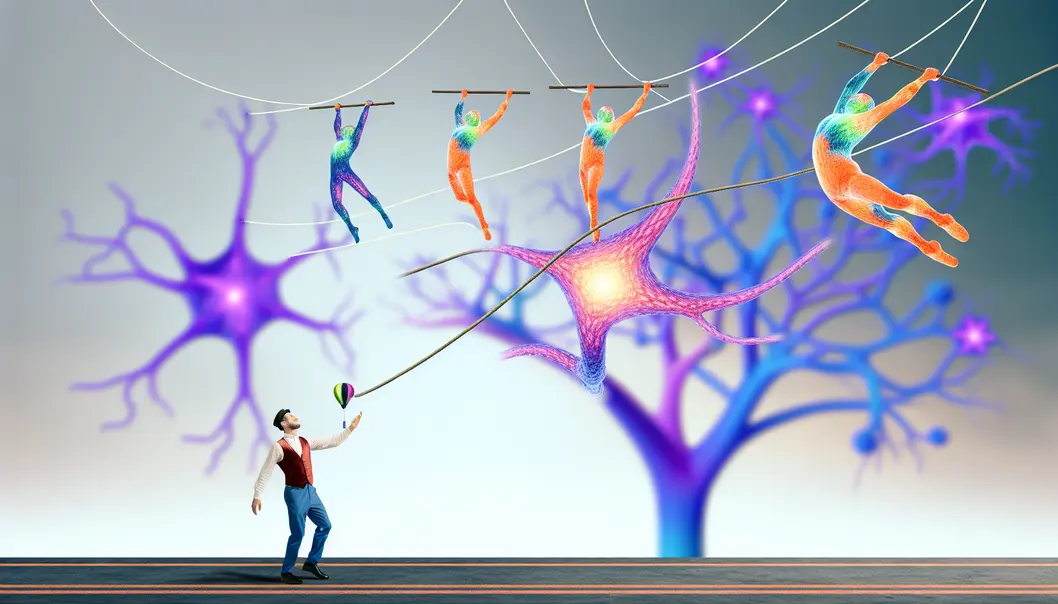
Imagine a bustling circus where neurons are the tiny performers, each with a special act under the big top of a neural network. These neurons, with their colorful costumes and daring acrobatics, are crucial to the show. Let’s step into this vibrant arena and see how these performers pull off their jaw-dropping feats.
In the circus of the neural network, each neuron plays the role of a nimble trapeze artist, swinging from one connection to another. These performers receive signals, like a performer catching a baton mid-air, processing them with lightning speed. When a neuron successfully catches a signal-baton, it gets its moment in the spotlight to execute its trick, firing off its own signal to fellow neuron performers.
These tiny circus acrobats work in harmonious chaos, knowing that the show must go on. But they don’t just perform in isolation. Each neuron has countless synaptic pathways — the high wires of the network — threading through the brain of the AI like an intricate spider web. Like skilled jugglers, neurons balance these several pathways, effortlessly juggling multiple connections simultaneously.
Moreover, within this circus act, there’s an elaborate choreography, much like an expertly coordinated plate-spinning act. The neurons’ job isn’t simply to react; they must also learn the timing and sequence of the show. This involves adjusting their performance in real-time, akin to perfecting a clown’s act to maximize laughter. They adjust their weights — the strength of their connections — transforming novice performers into seasoned artists, ensuring the audience (or the network) sees a flawless spectacle.
Neuron performers also require support from the trainers — methods like backpropagation — which help them refine their techniques. Feedback loops act as a sort of rehearsal. Here, the neurons get constructive criticism, fine-tuning their tricks to perfection.
The interaction among these neuron performers is crucial. They collaborate, like a team of synchronized swimmers, diving gracefully and surfacing with ease. Each neuron knows its fellow performer’s strengths and adjusts its act accordingly. This seamless interplay is the foundation of an AI’s learning experience, ensuring the ensemble works towards the grand finale — a fully trained, effective neural network.
In this neural circus, synchronization is key. Each performer must hit their mark perfectly for the show to wow its audience. Just like the comedic timing of a clown, neurons must process information precisely to make complex decisions and predictions.
This playful analogy of neural networks as a circus illuminates the intricate yet whimsical interplay of neurons. And if you’re curious about how AI decision-making affects industries and environments where speed is of the essence, you might find useful information in articles focused on AI decision-making in startups. Let the neurons continue their dazzling performance as we turn the spotlight to the layers that orchestrate their acts in our next chapter!
Layers: The Stage Crew of Neural Networks
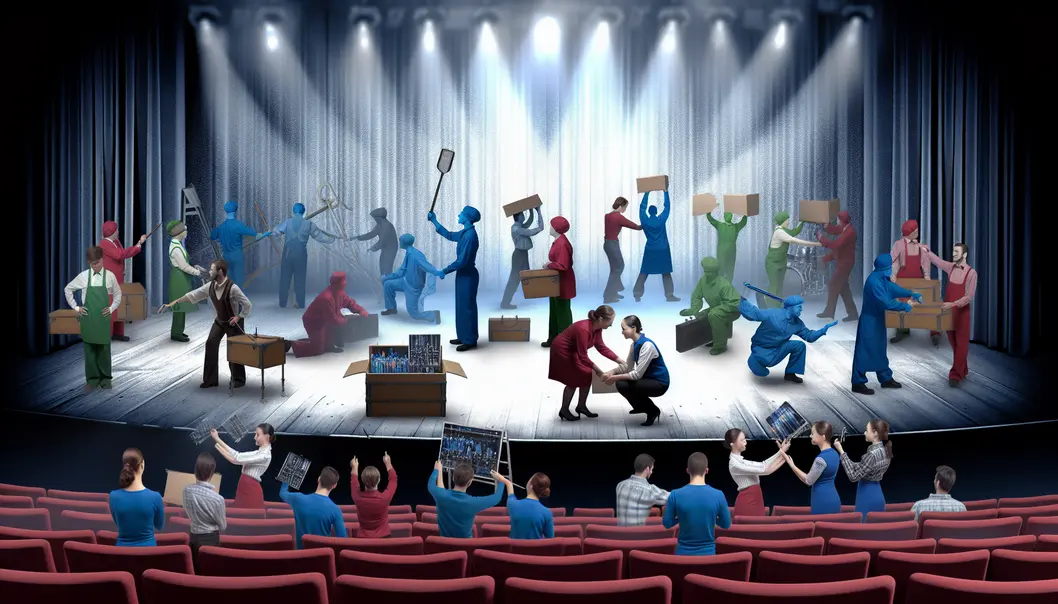
Imagine a theater full of dazzling lights, captivating scripts, and mesmerizing acts—none of this magic would happen without the backstage heroes: the stage crew. Similarly, in the awe-inspiring world of neural networks, layers form the remarkable stage crew, orchestrating every little detail behind the scenes to ensure a smashing performance. Let’s unravel how each layer, akin to a theater task, makes the neural network’s show a spectacle worth witnessing.
First in line, we have the Input Layer—the ever-dedicated stage crew member who opens the curtains. They’re the first to welcome data onto the stage, ensuring every bit of information is well-prepared to enter the spotlight. Without them, the data would just stare out from the wings, waiting for cues that’d never come.
Next, the Hidden Layers are the set of technicians bustling around like headless chickens when the show is live. These folks are where the real magic happens, akin to special effects wizards. Just like how the right mix of lighting and sound effects can transform a bland scene into a spectacular illusion, the hidden layers take the raw data and flex their muscles to extract meaningful patterns. Multiple hidden layers often work in tandem, like a seamless assembly line, tightening nuts and bolts of the show.
Among these hidden beings, the Activation Functions play the melody of the backdrop. If a scene demands a romantic undertone, they strum a soft serenade; if it needs suspense, they adjust the chords just right. Activation functions decide how the data ‘lights up,’ offering a gentle nudge that amplifies or dims signals on cue, adding emotional depth to the neural narrative.
And as the show picks up pace, the Weights and Biases make their appearance, resembling the techies who lug props and set pieces, balancing everything perfectly. If anything’s too heavy, the props might not be pace-friendly; similarly, each weight and bias is rigorously fine-tuned to ensure the neural show flows without hiccups, steering inputs onto the right trajectory through learning.
As the act nears its end, the Output Layer steps in—much like the esteemed announcer, tying all that drama into a bow. They translate the neural network’s captivating tale into outcomes understandable to the audience, sealing the performance with a crisp, clear message.
But what’s a successful play without a post-show review? Enter Backpropagation, akin to the relentless crew member reviewing performance tapes. They ensure any missteps from the current act get corrected, funneling feedback back to the hidden layers and tuning weights and biases for a stellar future act. Always there to whisper strategies during rehearsals, backpropagation means every error becomes an act of improvement.
So, there you have it—the behind-the-scenes splendor of neural network layers. Much like tireless stagehands, each layer contributes its unique talent, making sure the performance dazzles and draws raves. A standing ovation is in order for these unsung crew members, always ensuring the show goes on without a hitch.
If you’re intrigued by how AI makes decisions behind its enigmatic curtains, exploring AI decision-making in startups could provide some fascinating insights.
Final words
In this whimsical tour of neural networks, we’ve unmasked the neurons as fearless circus performers and layers as the unsung heroes of stage production. Remember, while the journey might feel like a comedy of errors, the underlying technology is transforming our world in fascinating ways. As you continue to explore AI, let curiosity guide you, and never forget the fun side of learning.
Ready to elevate your business with cutting-edge automation? Contact Lam Ha | AI Automation today and let our expert team guide you to streamlined success with n8n and AI-driven solutions!
Learn more: https://lamhaiauto.cc/lien-he/
About us
Lam Ha | AI Automation is a forward-thinking consulting firm specializing in n8n workflow automation and AI-driven solutions. Our team of experts is dedicated to empowering businesses by streamlining processes, reducing operational inefficiencies, and accelerating digital transformation. By leveraging the flexibility of the open-source n8n platform alongside advanced AI technologies, we deliver tailored strategies that drive innovation and unlock new growth opportunities. Whether you’re looking to automate routine tasks or integrate complex systems, Lam Ha | AI Automation provides the expert guidance you need to stay ahead in today’s rapidly evolving digital landscape.
 English
  Tiếng Việt
[…] Moreover, the development of such AI characters is an ongoing endeavor. Programmers continuously feed a dynamic script into the neural networks, ensuring that the humor remains relevant and refreshingly funny. It’s a sophisticated blend of technology and human creativity that keeps the conversational tones both genuine and engaging. Dive deeper into how these neural networks keep the fun alive here. […]
[…] Fortifying our understanding of these machines and their functions help us to appreciate the intricacy and innovation involved. When next you encounter a self-driving car, remember, you’re witnessing not just a vehicle in motion but a sophisticated decision-making system, continually learning from and adapting to its surroundings. For a more in-depth exploration on how such smart systems evolve, consider delving into how neural networks support these decision-making processes. […]