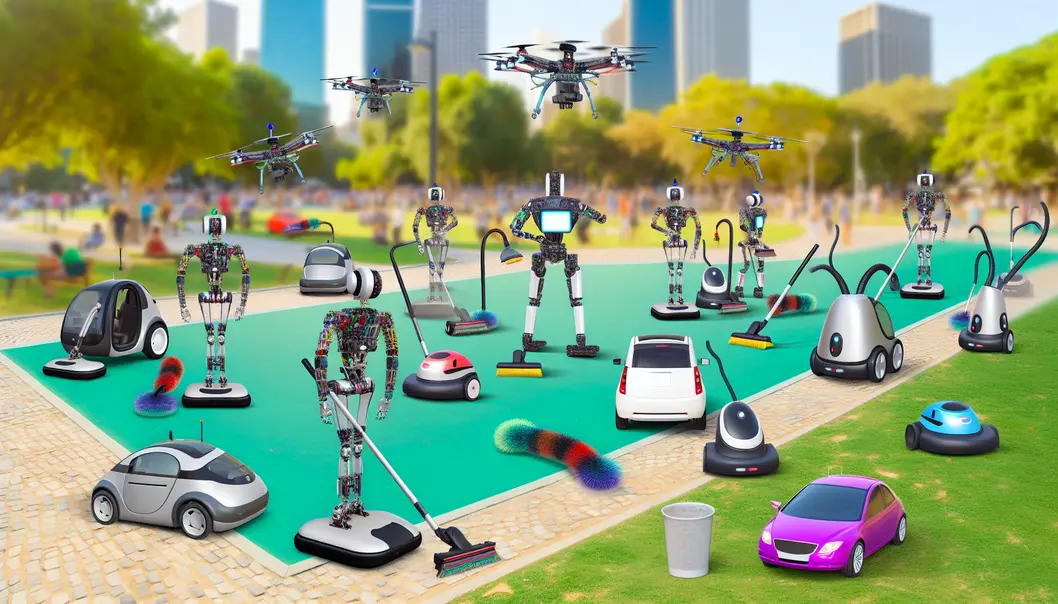
So, you thought your robot vacuum was impressive because it avoided your cat? Well, autonomous systems are here to remind us that machines can do more than just clean up fur. From drones that deliver burritos (seriously) to cars that drive like your grandma—safe and slow, these systems are everywhere. Let’s dive into what’s making autonomous systems tick and how they’re gearing up to replace us all (just kidding, slightly).
When Robots Make Up Their Minds: A Decision-Making Extravaganza
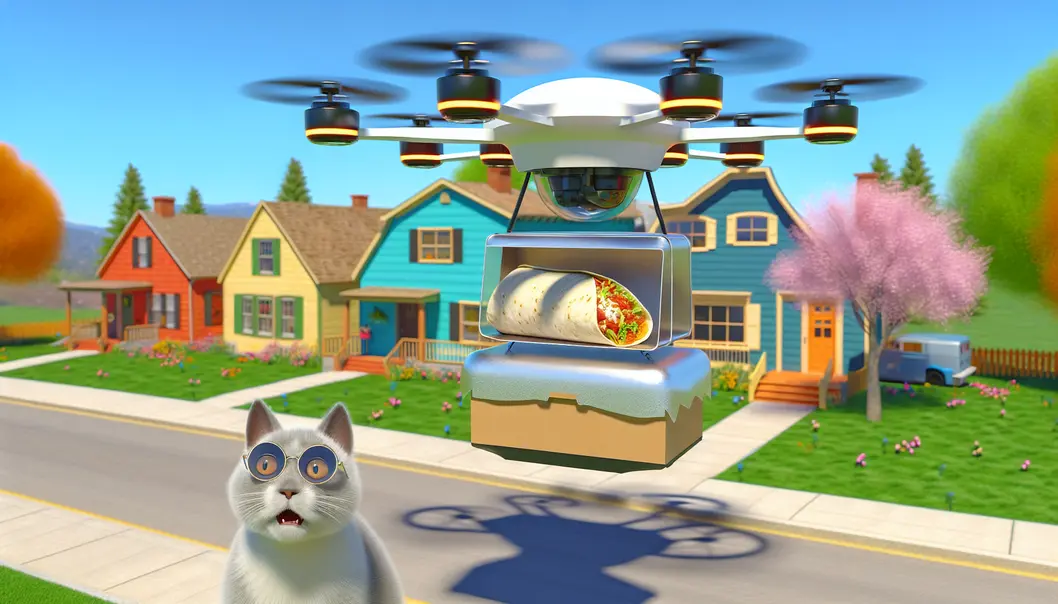
Autonomous systems possess a fascinating and incomprehensibly agile ability to make decisions independently, a characteristic that’s shaping the future of automation. Picture this: a robot tasked with the simple job of delivering a burrito could choose a drone or, humorously yet unlikely, a cannon! Such scenarios aren’t about futuristic whimsy but are based on very real technologies and the complex ‘thought’ processes of robots.
At the heart of these systems are advanced sensors, which constantly gather data from their environment. This data could be anything from spatial coordinates, nearby obstacles, atmospheric conditions, to even the social context of the delivery location. These sensors act like the robot’s senses, mimicking the human abilities to see, feel, hear, and more, though in a highly sophisticated and often more accurate manner.
From this sensory input, algorithms—essentially the decision-making ‘brains’ of autonomous systems—start their work. These algorithms process the input in real time, comparing it against pre-programmed objectives and priorities. For example, in choosing between drone delivery and a more terrestrial method, the algorithm evaluates speed of delivery, cost, environmental impact, and even customer preference. These aren’t random choices but calculated decisions made through a complex layering of logic, often involving machine learning models that adapt and improve over time.
The multi-tier ‘brain’ of these robots often resembles an onion, with layers upon layers of decision-making protocols that guide each choice. The outer layer may deal with simple navigational decisions, like turning or stopping. Deeper layers might engage with more complex considerations, such as ethical implications or long-term strategic thinking.
Such abilities to make independent decisions in a complex world highlight the blend of technology and what might humorously be called ‘magic dust’. It’s the seemingly mysterious quality that enables machines to perform tasks which, to the casual observer, might seem like decisions based on intuition or even preference, much like a roommate debating between chips or a salad.
Autonomous decision-making isn’t just about the practical and immediate, like delivering your dinner. It involves deeper, more consequential decisions that consider multiple factors and potentially conflicting goals. For instance, should an autonomous vehicle prioritize passenger safety over pedestrian safety? These are the types of questions that push the capabilities of current technologies and require continuous advancements in both hardware and software.
As these systems evolve, the line between human and machine decision-making continues to blur, promising a future where our cars, home assistants, and even large-scale industrial machines may not just serve us, but collaborate with us, making decisions that were once solely the domain of humans.
Self-Driving Cars: The Ultimate Stress-Test for Patience
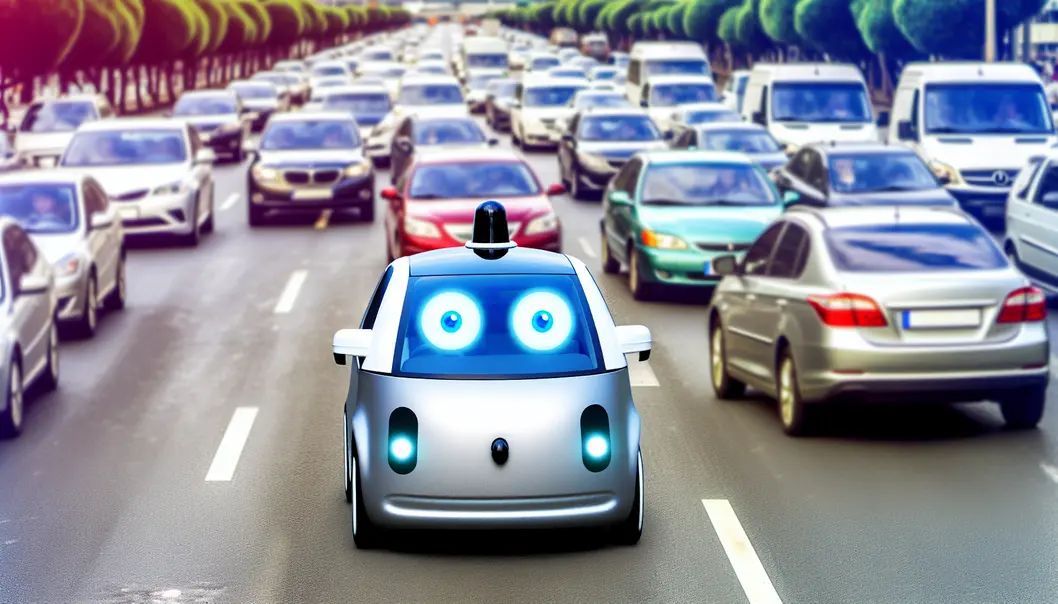
As we transition from the intricate dance of decision-making in everyday autonomous systems reviewed in the previous chapter, our journey veers into a special class of autonomy: self-driving cars. These marvels of engineering occasionally traverse the streets with the cautious deliberation akin to a meticulous elder relative—analyzing, pausing, and navigational recalibrating with a patience that would test even a saint.
Self-driving cars are equipped with a robust suite of sensors and cameras that work uninterruptedly to interpret an array of inputs. Their ability to see—an amalgamation of lidar, radar, and optics—creates a real-time, three-dimensional map of the environment. This is not merely a static grasp but a dynamic understanding, continuously updated as the vehicle moves. Unlike traditional GPS maps which show static routes, these cars possess cognitive maps that learn and adapt, making them potentially more intelligent and certainly more current.
Imagine these maps as living entities in the vehicular brain, adjusting predictions and pathways like a seasoned chess player contemplating unforeseen moves. But even with thousands of possible routes at any given moment, what happens if the data feeding this cognitive matrix is flawed? In situations of ‘bad-data’ days, the cars might exhibit hesitations or choose less optimal routes—a mundane reflection of human error in machine form. Nevertheless, advances in machine learning are rapidly reducing these incidences, strengthening the resilience of these systems.
Beyond sight and mapping, communication in the realm of self-driving cars speaks volumes in silence. Utilizing a technique known as Vehicle-to-Everything (V2X) communication, these cars can ‘talk’ to traffic lights, pedestrian crossings, and other vehicles without the need for visible or auditory signals. This silent conversation ensures an efficient flow of traffic and greatly enhances safety for all road users, reinforcing the harmony of shared spaces.
To encapsulate the tranquil experience of riding in a self-driving car, one might liken it to being in a mobile meditation chamber. There’s no shouting at reckless drivers or honking in delays. Every maneuver is calculated with almost Zen-like focus, quietly and unhurriedly, forwarding you to your destination as smoothly as gliding on still water. This calm assuredness in technology’s capabilities brings forth a new era where, perhaps whimsically, roads might become obsolete one day as networks of these autonomous vehicles evolve.
Fortifying our understanding of these machines and their functions help us to appreciate the intricacy and innovation involved. When next you encounter a self-driving car, remember, you’re witnessing not just a vehicle in motion but a sophisticated decision-making system, continually learning from and adapting to its surroundings. For a more in-depth exploration on how such smart systems evolve, consider delving into how neural networks support these decision-making processes.
Final words
There you have it—autonomous systems are not just science fiction; they are the quirky, reliable decision-makers of our future. From sassy drones dodging pets to cars that drive more peacefully than you’ve ever dreamed, they continue to surprise and bewilder us. Now, grab your seatbelt or your drone remote and join the autonomous revolution, because someone—or something—has data to crunch!
Ready to elevate your business with cutting-edge automation? Contact Lam Ha | AI Automation today and let our expert team guide you to streamlined success with n8n and AI-driven solutions!
Learn more: https://lamhaiauto.cc/lien-he/
About us
Lam Ha | AI Automation is a forward-thinking consulting firm specializing in n8n workflow automation and AI-driven solutions. Our team of experts is dedicated to empowering businesses by streamlining processes, reducing operational inefficiencies, and accelerating digital transformation. By leveraging the flexibility of the open-source n8n platform alongside advanced AI technologies, we deliver tailored strategies that drive innovation and unlock new growth opportunities. Whether you’re looking to automate routine tasks or integrate complex systems, Lam Ha | AI Automation provides the expert guidance you need to stay ahead in today’s rapidly evolving digital landscape.
 English
  Tiếng Việt