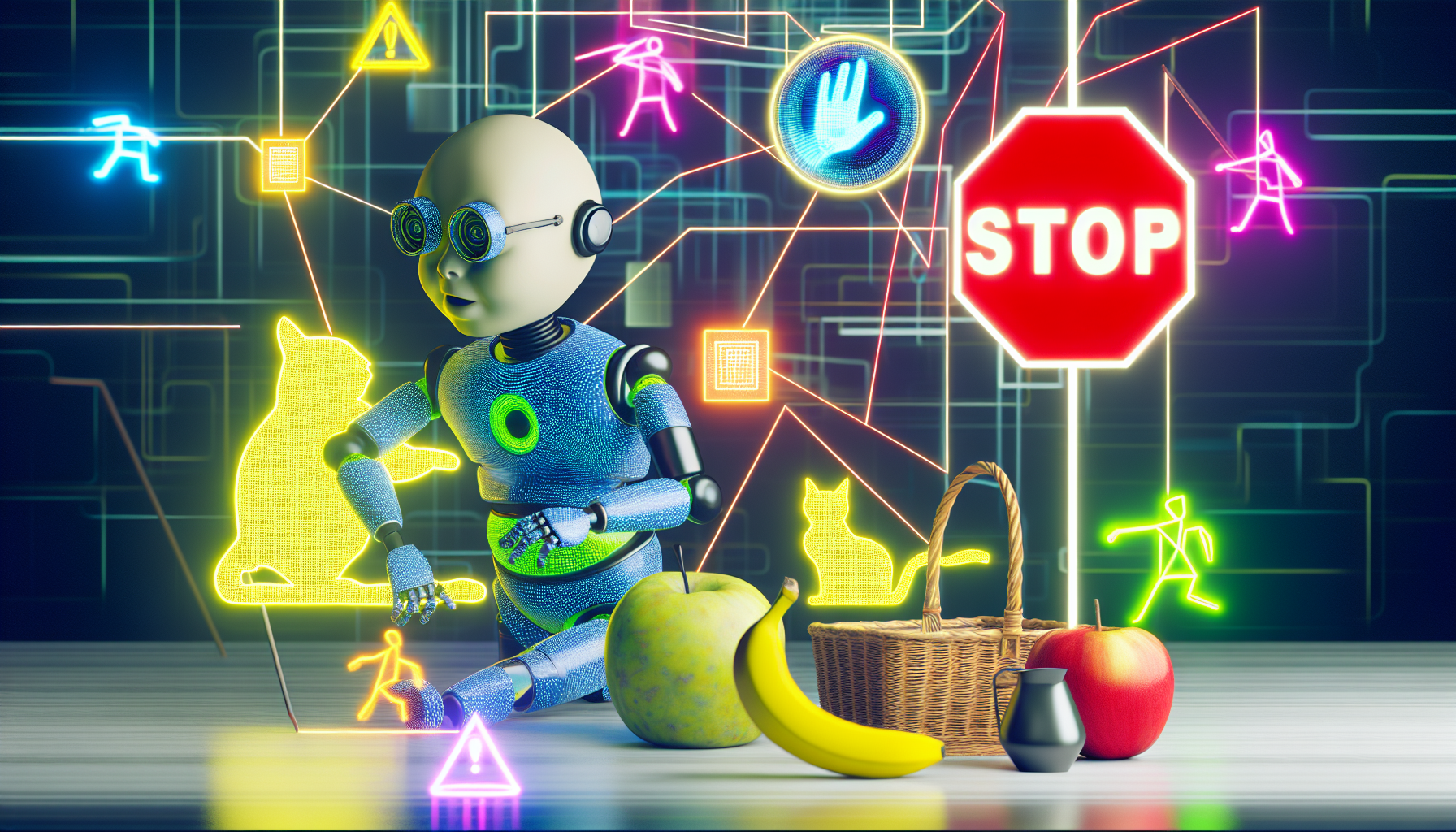
Have you ever wondered how your phone knows the difference between your cat and your dinner? Welcome to the magical realm of computer vision—where algorithms work hard to decipher images faster than you can say, ‘What’s that blurry thing?’ Whether it’s facial recognition, self-driving cars, or attempting to count beans on Instagram, computer vision is revolutionizing how machines interpret the world around them. And good news—it’s less complicated than you might think (once we sprinkle in some jokes). Let’s dive into the utterly fascinating, semi-confusing, and totally hilarious world of teaching computers how to see.
Who Needs Eyes When You Have Pixels?
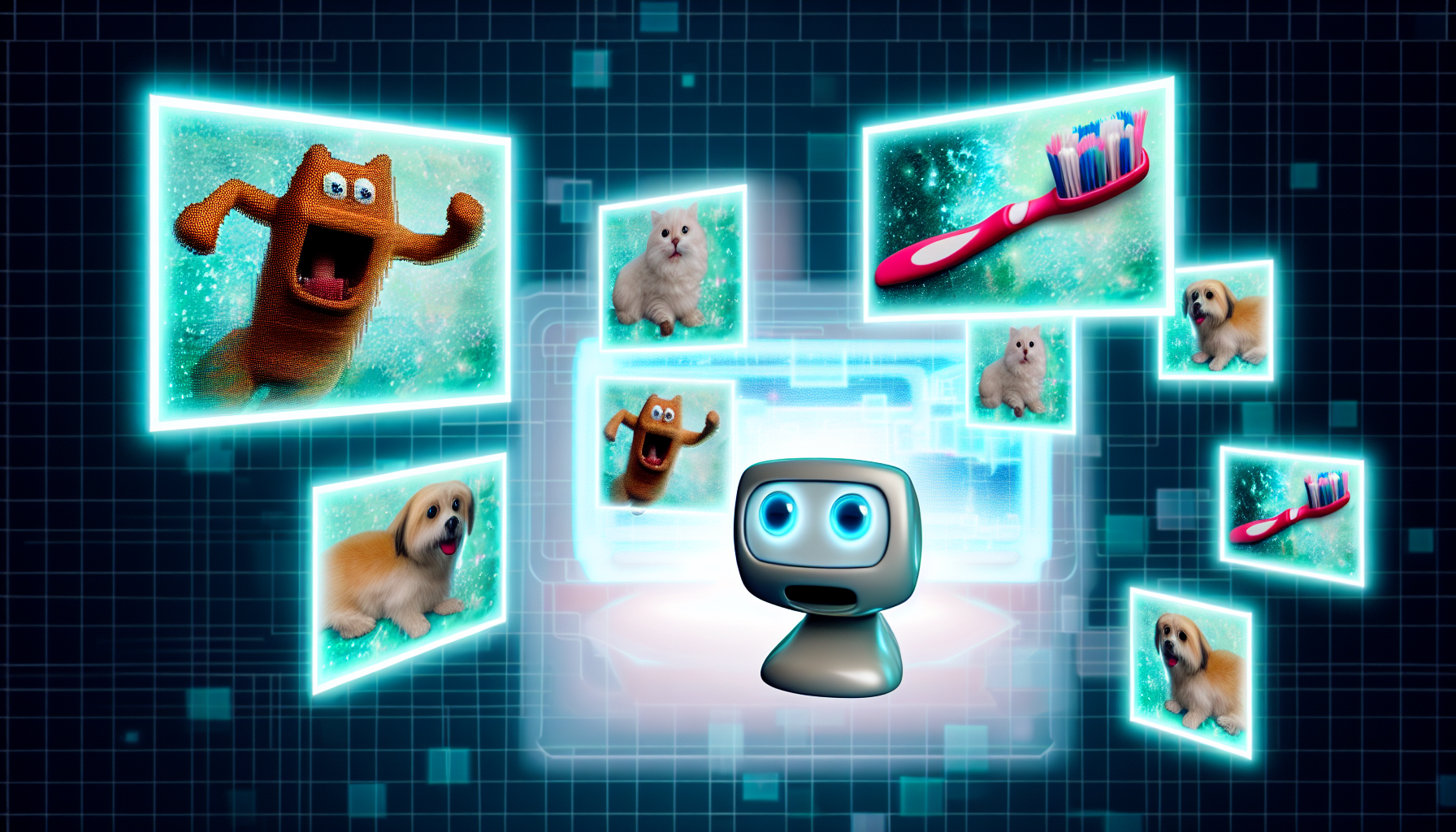
Imagine you’re talking to an alien — one who’s never experienced the riotous explosion of colors on Earth, never seen the light of day or the dark of night. How would you explain the concept of ‘seeing’? Well, computers are kind of in the same boat. They don’t inherently ‘see’ as we do; they interpret the world through the lens of pixels in a grid, like tiny dots of dark and light in a vast sea of information.
Each of these pixels can be thought of as ‘dots on steroids’; they’re not just simple dots, but spokes in a massive wheel of data. Each pixel is packed with bytes of levels for colors, each representing varying degrees of light and intensity. When your phone is trying to figure out if it’s looking at a cat, it doesn’t see fur, whiskers, or adorable eyes. Instead, it sees a matrix of these enhanced dots.
The magic begins when mathematical algorithms take the stage. These algorithms are adept at pattern recognition — turning the chaos of pixels into the shapes and textures of our world. The process starts with something seemingly simple: looking for edges. Why edges? Because they define the boundaries and basic structure of objects within a scene. Detecting edges is like drawing the outlines in a coloring book before you decide what crayons to use.
From there, feature detection kicks in. This is where your phone starts identifying specific characteristics (like the shape of eyes or the pattern of fur) that hint at ‘catness’. But it isn’t just looking at superficial details; it dives deep, analyzing textures and patterns in ways our human brains aren’t trained to calculate.
This powerful pixel examination is guided by algorithms thriving on mathematical techniques such as convolution — which you might liken to a digital version of focusing a microscope. It enhances certain features and blurs out irrelevant data, helping the machine focus on what’s important. These algorithms sift through data, recognize patterns, make inferences, and gradually construct a digital jigsaw puzzle that says: ‘That’s a cat!’
Our phones, while lacking in eyesight, compensate with pixel prowess and mathematical muscle, making them bizarrely brilliant at recognizing cats, dogs, and even items we might confuse ourselves. As we venture further into the realms of artificial intelligence, these systems only stand to become smarter, turning more and more of our pixelated chaos into recognizable scenes with startling accuracy.
To understand how these smart systems continue their quest of categorization through self-learning mechanisms, be sure to check out the next chapter on Deep Learning and neural networks. They are the overachieving nerds of the computer vision world, propelling ‘seeing’ machines into new territories of intelligence and capability.
Deep Learning: When Computers Get Nerdy About Images
Imagine if sorting socks wasn’t just about matching colors but about identifying intricate patterns and subtle hues, even knowing the mood the sock designs imply. That’s sort of what neural networks do in the world of computer vision, just with a lot more computational panache and far fewer actual socks.
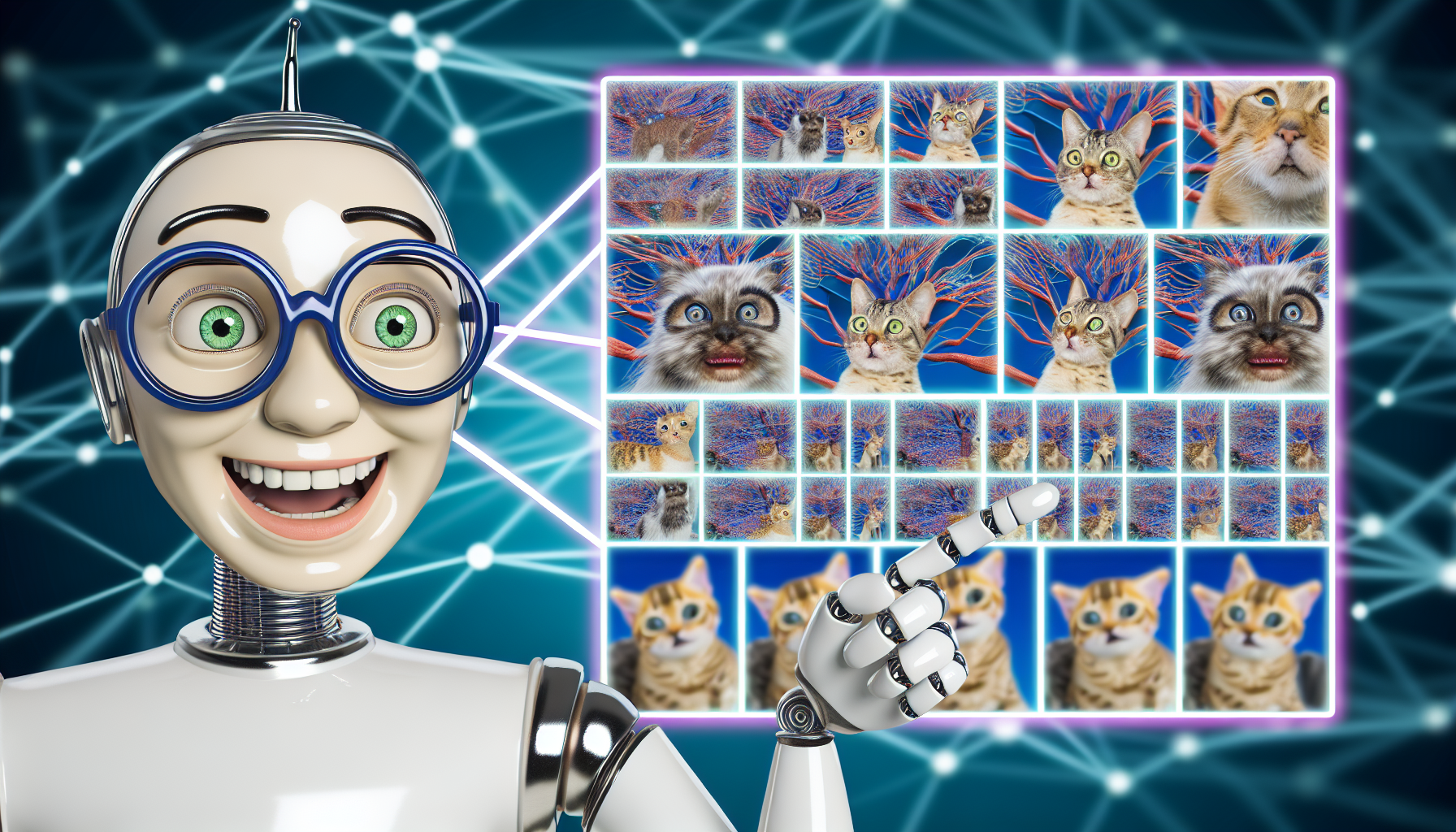
Neural networks, especially the type called Convolutional Neural Networks (CNNs), are those earnest overachievers of the AI world, obsessively turning images into categories. Think of CNNs as students forever fine-tuning their Instagram filters until they know if their breakfast toast looks more like a dog or a piece of, well, plain old toast. This is all done through what we call ‘convolutions’ which, like social media filters, tweak and amplify features in the image, but instead of beautifying a selfie, they’re making sense of the data.
These neural networks look at an image and go through layers upon layers of these convolutions, each layer understanding a bit more about what the image contains—edges, textures, colors—and each step is like zooming out a bit more to understand the bigger picture. Initially, they might just identify edges and basic shapes; farther along, they recognize complex features like eyes or fur patterns.
What’s quirky is how tiny variations in image quality or perspective can befuddle these networks. It’s akin to humans mistaking a vaguely bear-shaped patch of darkness in the woods for a real bear. Ever seen those viral images where a computer thought a muffin was a chihuahua? That’s often down to faults in low-resolution images or unusual angles—proof that even computer nerds have their befuddling moments.
The end game for these neural network valedictorians? Being able to declare with confidence, ‘This is totally a cat!’ or whatever they’ve been tasked to find. Each decision is the result of combining thousands of learned features, processed through multiple layers, deriving meaning from what might as well have been a digital soup of pixels.
Despite their impressive abilities, neural networks are not infallible. They’re only as good as the data they’ve been trained on, much like a student is only as knowledgeable as their study material. For more humorous examples of when AI gets it amusingly wrong, check out Neural Networks in Fun. So next time your phone recognizes a cat where you see only a shadow, remember it’s just a sign of how deeply it’s been staring at the world, turned data nerd.
Final words
Congratulations! You now know how machines interpret the chaotic visual world of pixels and shapes. From mathematical feature extraction to full-on deep learning magic, computer vision is evolving rapidly—and the best part? It’s turning computers into expert cozy-cat-identifiers! Who knew engineers had such priorities? Keep exploring this fascinating field, and who knows—you might just be the next mastermind behind robot artists or machines that know when a sock is just a sock.
Ready to elevate your business with cutting-edge automation? Contact Lam Ha | AI Automation today and let our expert team guide you to streamlined success with n8n and AI-driven solutions!
Learn more: https://lamhaiauto.cc/lien-he/
About us
Lam Ha | AI Automation is a forward-thinking consulting firm specializing in n8n workflow automation and AI-driven solutions. Our team of experts is dedicated to empowering businesses by streamlining processes, reducing operational inefficiencies, and accelerating digital transformation. By leveraging the flexibility of the open-source n8n platform alongside advanced AI technologies, we deliver tailored strategies that drive innovation and unlock new growth opportunities. Whether you’re looking to automate routine tasks or integrate complex systems, Lam Ha | AI Automation provides the expert guidance you need to stay ahead in today’s rapidly evolving digital landscape.
 English
  Tiếng Việt